
01FILM & CAMPAIGN
Advertising Film Transcription
Turn commercials, campaign videos and branded films into clear, structured scripts for review, adaptation, translation and multilingual production.
Professional transcription services
Convert audio and video recordings into clear, accurate transcripts for business, media, research and multilingual workflows.
Textsprime combines AI-assisted transcription with human review for interviews, meetings, podcasts, webinars, training content and other recorded media.
languages
linguists
global delivery
We will reply within 15 minutes.
Share the essentials. A representative file is enough for an initial review.
A useful transcript is more than a block of converted speech. We turn recorded audio and video into clear, structured scripts that are easier to review, edit, localize and reuse across your content workflow.
Spoken content is captured with attention to context, names, terminology and meaning, giving your team a dependable written reference for the original recording.
Speaker labels, timestamps, paragraph structure and agreed formatting make transcripts easier to navigate, review and hand over between teams.
Your finished script can move directly into editing, translation, subtitling, voice over, dubbing, publishing or other content workflows.
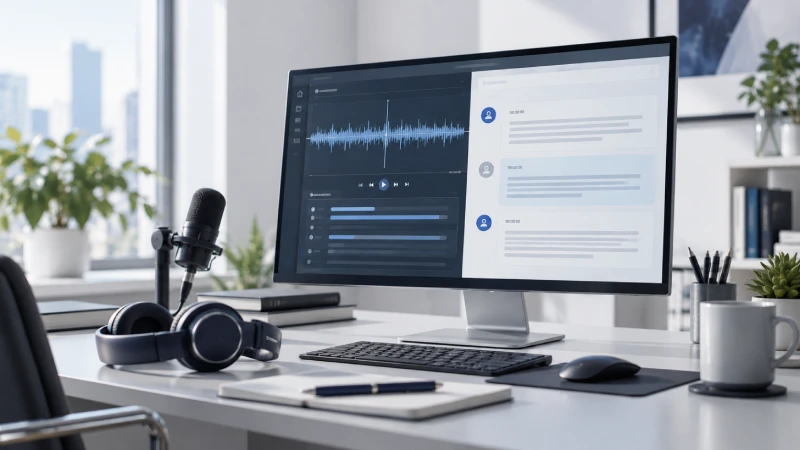
Different recordings require different transcription workflows. From advertising films and interviews to livestreams and user-generated video, we turn spoken content into structured scripts built for practical use.
Turn commercials, campaign videos and branded films into clear, structured scripts for review, adaptation, translation and multilingual production.
Convert podcasts, meetings, presentations, voice recordings and other audio files into accurate, readable and well-organized written content.
Capture interviews and multi-speaker conversations with clear speaker identification, readable structure and the level of detail your project requires.
Transform recorded livestreams, webinars, online events and digital broadcasts into searchable scripts that can be reviewed, localized and reused.
Create usable scripts from creator videos, testimonials, customer content and social media recordings for localization, editing and content repurposing.
Convert corporate, educational, marketing and digital video content into structured transcripts ready for editing, publishing and multilingual workflows.
Not every project needs the same level of detail. Choose a transcription style based on how closely the script should follow the recording and what your team plans to do with the finished text.
Captures spoken content as closely as possible, including fillers, repetitions, false starts and other relevant speech details.
Removes unnecessary fillers, repeated words and verbal clutter while preserving the speaker's meaning, tone and original message.
Lightly refines spoken language into clearer written content, improving readability and structure without changing the intended meaning.
Adds timestamps at agreed intervals, speaker changes or selected production points so teams can quickly match text to the source media.
Tell us how the transcript will be used. We can recommend the appropriate transcription style, timestamping approach and level of editing for your workflow.
Every transcription project is different. We can adapt the structure, level of detail and delivery format to fit how your team plans to review, edit, localize or publish the finished script.
From receiving your source files to delivering the finished transcript, each step is structured around your content, formatting requirements and intended next use.
Upload your audio or video files, or provide secure access to the source content your team needs transcribed.
We confirm language, transcription style, speaker labels, timestamping, terminology and the required delivery format.
Spoken content is converted into a structured script according to the agreed level of detail and project requirements.
The transcript is reviewed for language accuracy, names, terminology, speaker identification, timestamps and formatting.
Receive a clean, structured transcript ready for review, editing, translation, subtitling, publishing or further production.
Speech recognition technology can accelerate transcription, but reliable business content still needs human attention. We review context, terminology, speaker details and formatting before the final script moves into your workflow.
Transcripts are reviewed in context so meaning, sentence structure and spoken intent are not left entirely to automated speech recognition.
Extra attention is given to product names, brands, people, technical vocabulary and approved terminology that automated tools may interpret incorrectly.
Speaker labels, timestamps, formatting and agreed project requirements are checked before delivery so the transcript is ready for practical use.
Source media and transcripts can be handled according to agreed confidentiality, access and project security requirements throughout the workflow.
When recorded content needs to reach audiences in other languages, transcription is often only the first step. We structure your source scripts so they can move efficiently into translation, subtitling, voice over, dubbing and wider localization production.
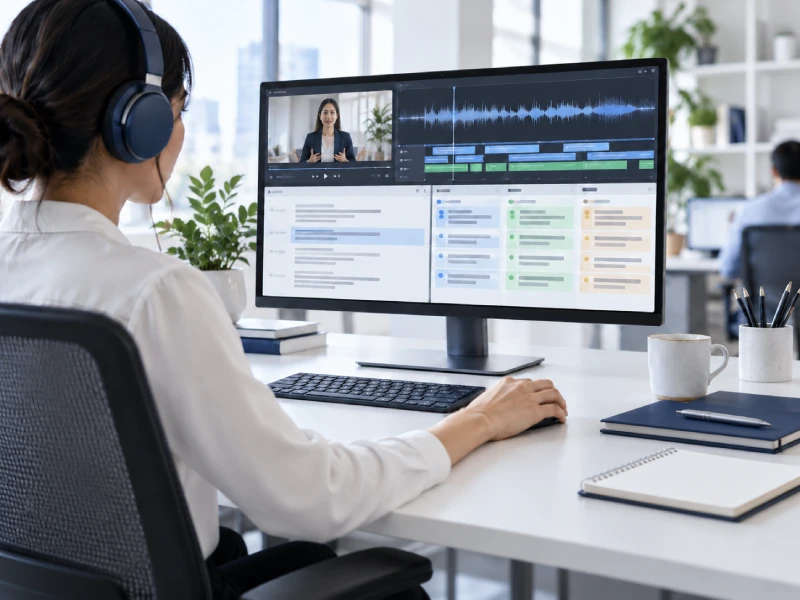
Original recorded content provides the source material for the multilingual workflow.
Spoken content becomes a clear, structured and reviewable source script.
The approved transcript provides a stronger source for accurate multilingual adaptation.
Move into subtitles, voice over, dubbing or other multilingual content production.
Transcribe recorded content in supported languages while preserving speakers, terminology, meaning and the structure needed for later use.
Clean formatting, clear speaker identification and controlled terminology give translators a more reliable source script to work from.
Keep transcription, translation, subtitling and voice production connected instead of rebuilding the same content across separate workflows.
Transcription is often part of a larger content workflow. We combine language expertise, flexible project requirements and connected localization services so your team can move from recording to final multilingual content with fewer handoffs.
We prepare scripts for practical content workflows, not simply as blocks of converted speech. Structure, speaker information, terminology and formatting can all be aligned with what happens next.
Context, names, specialist terminology and meaning receive human attention, helping reduce the errors that automated speech recognition can introduce into professional content.
Choose the transcription style, timestamping, speaker labels, formatting and delivery structure that fit your internal process instead of adapting your workflow to a fixed output.
Continue from transcription into translation, subtitling, voice over and dubbing without rebuilding the source content across separate suppliers and disconnected workflows.
Find answers about transcription styles, supported content, timestamps, speaker labels, delivery formats and how transcripts can connect with your wider localization workflow.
Send us a sample file or project brief and we can help define the right transcription approach before production begins.
Script transcription converts spoken content from an audio or video recording into a structured written script. Depending on the project, the transcript can include speaker labels, timestamps, formatting, production notes and other details needed for editing, publishing or localization.
We can work with a wide range of recorded content, including advertising films, interviews, podcasts, meetings, presentations, corporate videos, livestream recordings, webinars, UGC videos and other professional audio or video content.
Verbatim transcription follows the recording closely and can retain fillers, repetitions, false starts and other speech details. Clean verbatim removes unnecessary verbal clutter while preserving the speaker's meaning and tone, making the transcript easier to read and more suitable for most business content.
Yes. Timestamps can be added at fixed intervals, speaker changes or selected production points. Speakers can also be identified by name, role or numbered labels depending on the information available and your preferred transcript structure.
Yes. Transcripts can be structured specifically for downstream localization. Clear speaker identification, controlled terminology and consistent formatting make the source script easier to move into translation, subtitling, voice over or dubbing.
Final transcripts can be delivered in common formats such as DOCX, TXT, PDF or XLSX. If your team already uses a specific template or document structure, share a sample and the deliverable can be aligned with your existing workflow.