
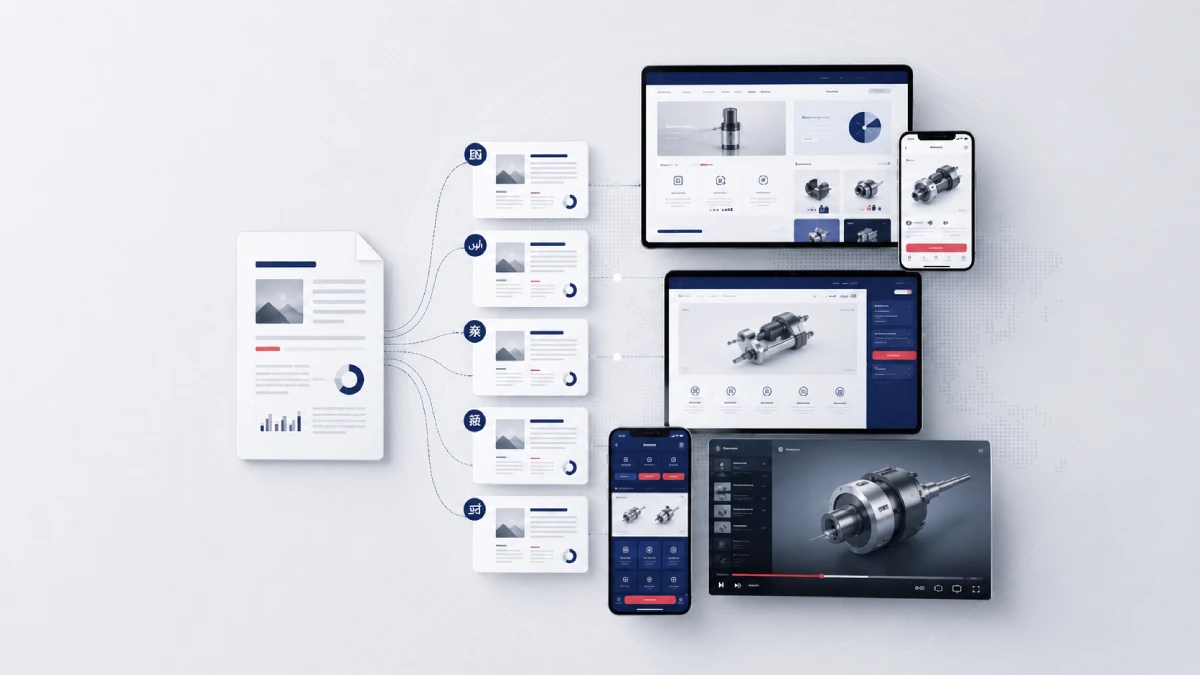
Accurately translated content can still feel unfamiliar or unsuitable in another market. Businesses planning multilingual websites, software, campaigns, documents, or videos should therefore define whether the project needs translation, localization, or a combination of both.
The distinction matters because the two services solve different problems. Translation primarily addresses the linguistic message, while localization considers how that message and the surrounding experience work for a particular locale, market, and use case.
Translation vs Localization: The Difference in 60 Seconds
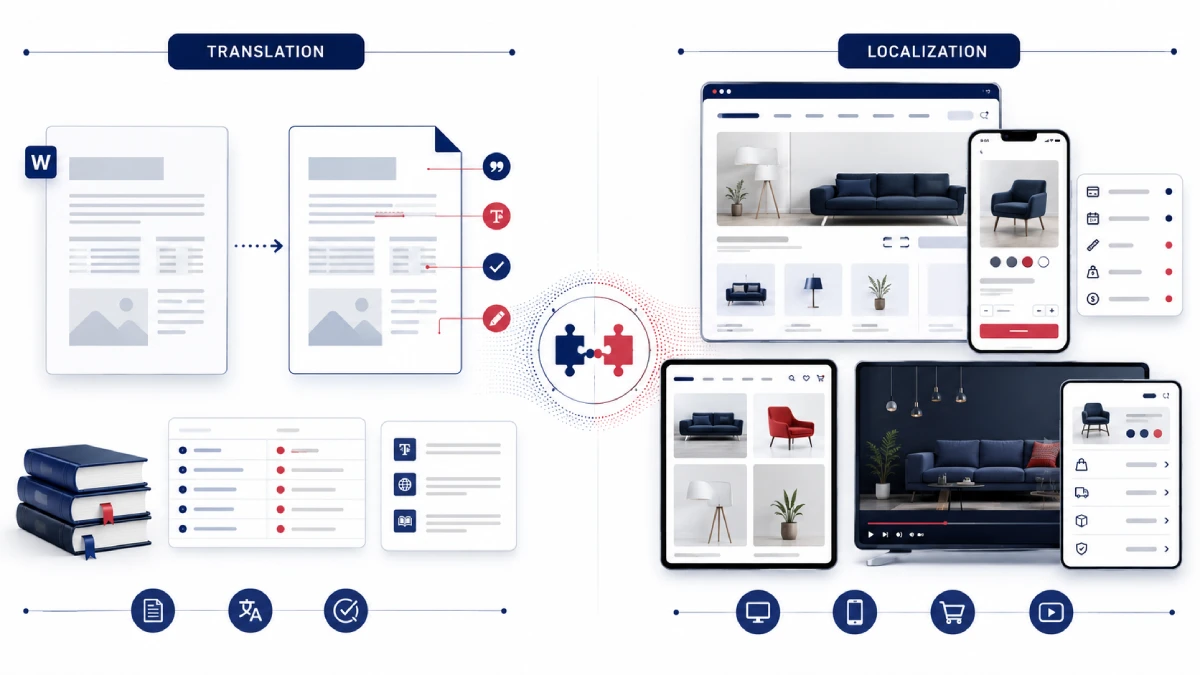
Translation transfers the meaning of content from one language to another. Localization includes translation but also adapts the wider content or product experience for a specific locale, such as tone, terminology, formats, visuals, layout, functionality, legal requirements, and user expectations. The right choice depends on purpose, audience, channel, and risk.
Translation therefore focuses primarily on language. Localization has a broader scope because it considers how content is presented, used, understood, and experienced in the target market.
That does not mean every international project needs full localization. A static internal document and a customer-facing mobile application have very different requirements.
What Is Translation?
Translation is the process of rendering intended meaning from a source language into a target language. A professional translator considers context, purpose, terminology, register, tone, and the expectations of the intended reader.
This is why professional translation is not word-for-word substitution. Languages organize ideas differently, so sentence structure, phrasing, and terminology may need to change substantially while the original meaning and purpose remain intact.
A translation project may also involve source review, terminology preparation, revision, formatting, and quality checks. ISO 17100 addresses requirements for professional translation-service processes and resources, while ISO 11669:2024 provides broader guidance for planning translation projects and defining specifications.
Content that may only require document translation services includes:
- Internal reports
- Business correspondence
- Factual reference materials
- Selected technical documentation
- One-time communications
- Content with limited market-specific design or functional requirements
However, the intended use matters more than the document type alone. A technical document used for internal understanding may only need translation, while the same information used in product compliance, safety instructions, or an official submission may require local terminology, formatting, specialist review, or regulatory adaptation.
What Is Localization?
Localization adapts content or a product experience for a specific locale. Translation is often a central component, but localization can also address linguistic, cultural, visual, technical, functional, and market-specific requirements.
Localization may involve:
- Tone, terminology, and cultural references
- Dates, time, numbers, and currencies
- Measurement units
- Address and telephone formats
- Images, icons, and other non-text assets
- Text expansion and layout
- Right-to-left writing direction
- Navigation and calls to action
- Forms, input fields, and validation
- Payment and delivery conventions
- Market-specific claims and notices
- Audio, subtitles, voice-over, and on-screen text
- Search terminology and metadata
- Functional and in-context testing
The W3C Internationalization guidance describes localization as adapting a product, application, or document for the language, cultural, and other requirements of a target locale. Translation may therefore be one part of localization rather than the complete process.
A Locale Is More Specific Than a Language
A language does not define every regional convention.
For example, users in the United States and the United Kingdom both use English, but they may differ in spelling, terminology, measurements, date formats, address conventions, and market expectations. Content can therefore require localization even when no language change is involved.
The Unicode Common Locale Data Repository maintains structured locale data for areas such as dates, numbers, currencies, units, scripts, and sorting. This illustrates why language localization is more complex than manually replacing a few visible formats.
Translation vs Localization: Key Differences at a Glance
| Dimension | Translation | Localization |
|---|---|---|
| Primary objective | Transfer intended meaning into another language | Adapt content or an experience for a specific locale |
| Scope | Primarily linguistic | Linguistic, cultural, visual, functional, technical, and market-specific |
| Content elements | Text, terminology, tone, structure, and references | Text plus formats, visuals, interface behavior, media, and local requirements |
| Team roles | Translator, editor, project manager, and subject expert | Translation roles plus engineers, designers, market reviewers, or testers as needed |
| Technology | CAT tools, translation memory, termbases, and QA tools | Translation tools plus CMS or repository integration, previews, builds, and issue tracking |
| QA requirements | Accuracy, completeness, terminology, fluency, consistency, and formatting | Translation QA plus visual, functional, in-context, and locale-specific testing |
| Typical deliverables | Translated and reviewed files | Integrated pages, builds, media, localized assets, and test reports |
| Cost and timeline factors | Volume, language, complexity, format, review, and deadline | Translation factors plus engineering, adaptation, integration, testing, and updates |
| Common use cases | Documents, correspondence, and factual content | Websites, software, ecommerce, campaigns, multimedia, and product experiences |
These are practical working distinctions rather than rigid boundaries. A translation project can include formatting and terminology adaptation, while a localization project can range from a few targeted market adjustments to a complete product localization workflow.
Translation vs Localization Examples
The difference becomes clearer when translation and localization are compared across real content types.
Legal or Technical Document
Translation may cover meaning, specialized terminology, instructions, numbers, references, and the original document structure.
Localization may additionally require jurisdiction-specific terminology, local units, mandatory notices, market-specific templates, or specialist review.
The key decision is the document’s intended use. A file prepared for internal reference has different requirements from one intended for official submission, product compliance, or safety-critical use.
Marketing Campaign
Translation can handle factual campaign information, product features, supporting copy, and straightforward messaging.
Localization may adapt:
- Brand tone
- Cultural references
- Local calls to action
- Market-specific claims
- Imagery
- Channel conventions
- Locally relevant examples
When the persuasive or emotional effect needs to be recreated with substantial creative freedom, transcreation may also form part of the project.
Ecommerce Product Page
Translation can cover product names, features, specifications, and instructions.
Localization may also change:
- Product category terminology
- Local search phrases
- Sizing and measurement units
- Currency display
- Payment options
- Delivery information
- Returns terminology
- Market-specific product claims
- Locally appropriate imagery
A useful decision point is whether the page only needs to inform existing users or must also attract, reassure, and convert customers in a specific market.
Website
Website translation converts page copy from one language to another.
Website localization may extend further into local keyword research, regional URLs, metadata, navigation, contact options, forms, legal notices, calls to action, and market-specific proof points.
For multilingual search visibility, Google Search Central recommends separate URLs for different language versions and supports hreflang annotations for localized variants. These technical signals help search engines understand page targeting, but they do not perform localization themselves.
Mobile App or Software Interface
Translation can cover interface strings, notifications, help text, onboarding messages, and app-store descriptions.
App and software localization may additionally require:
- Plural and gender handling
- Text expansion
- Right-to-left layouts
- Locale-aware date, number, and currency behavior
- Input and validation changes
- Resource integration
- Localized visual assets
- In-context review
- Functional testing
Official platform guidance from Apple and Android treats localization as part of product development rather than simply replacing interface text.
Video or E-Learning Content
Translation may cover transcripts, subtitle text, narration scripts, and course copy.
Localization can also involve:
- Subtitle timing
- Voice-over or dubbing
- On-screen graphics
- Adapted examples
- Assessment questions
- Course navigation
- Accessibility requirements
- Audio-visual quality assurance
The key question is whether users only need to understand the content or need a natural and functional viewing or learning experience.
Translation, Localization, Internationalization, and Globalization
Translation, localization, internationalization, and globalization are related concepts, but they should not be treated as synonyms.
- Translation transfers intended meaning between languages.
- Internationalization prepares content, code, design, and architecture so that different locales can be supported without repeated structural redesign.
- Localization adapts the content or product for a particular locale.
- Globalization describes the wider business and operational effort of bringing an offering to international markets.
A practical sequence is:
Global market strategy → Internationalization readiness → Translation and market adaptation → Localization testing → Release and ongoing updates
For software and other complex digital products, internationalization should ideally be considered before localization begins. Text may need to be separated from code, layouts may need to support expansion, and the product may need to handle different scripts, plural forms, date formats, or writing directions.
Localization can then be performed for each selected locale.
Terminology is not completely standardized across every organization. W3C describes its definitions as high-level working definitions, and software vendors sometimes use terms such as “globalization” and “internationalization” differently. Project briefs should therefore define the required work rather than rely on terminology alone.
When Is Translation Usually Enough?
Translation may be sufficient when:
- The content is primarily for internal use.
- The main purpose is factual understanding.
- The asset is static and has little interactive behavior.
- The audience is already clearly defined.
- Local formatting and market conventions have little effect on usability.
- The communication is one-time and relatively low risk.
Even in these situations, the consequence of error should be considered.
Before choosing translation alone, ask whether the content will be submitted to an authority, used for safety instructions, affect contractual rights, or depend on local terminology, standards, or units.
A technical, legal, medical, financial, or official document may require specialist review even if the project does not require full localization.
When Is Localization Usually Required?
Localization is usually the stronger starting point when users are expected to interact, purchase, register, learn, navigate, or make decisions.
Typical examples include:
- Customer-facing websites
- Software and mobile apps
- Ecommerce stores
- Marketing campaigns
- Product packaging
- Multimedia content
- E-learning
- Games
- Search-led content
- Market-specific product experiences
Localization is not all-or-nothing.
A project may require:
- Translation with selected locale-format changes
- Translation plus in-market terminology review
- Content localization without product engineering
- Full website or software localization
- Localization plus transcreation
- Localization plus regulatory or subject-matter review
The correct level should be based on the actual market experience the business needs to deliver.
How Localization Changes the Project Workflow
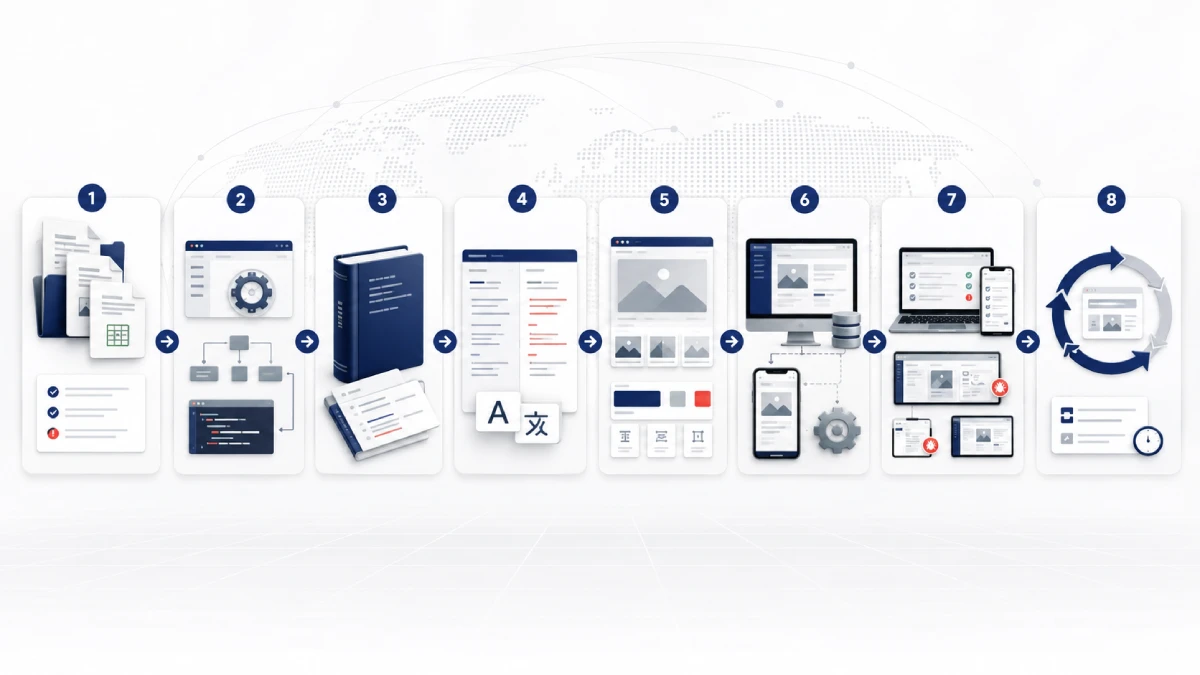
Localization normally extends beyond translating a source file.
- Audit the content and define target locales. Identify assets, owners, publishing channels, source languages, target languages, regions, and out-of-scope content.
- Check internationalization readiness. Confirm that text is separated from code, layouts can expand, local formats are not hard-coded, and different scripts or writing directions can be supported.
- Prepare terminology, style, and context. Provide glossaries, style guides, product references, screenshots, variables, character limits, and instructions for non-translatable terms.
- Translate and adapt market-specific elements. Coordinate language work with local terminology, formats, visuals, metadata, market claims, and media.
- Integrate localized content. Return resources to the relevant document layout, CMS, repository, application build, design file, subtitle workflow, or learning platform.
- Test in context. Review linguistic quality, visual rendering, links, forms, input behavior, right-to-left display, locale data, functionality, and audio-visual synchronization.
- Maintain updates. Manage changed strings, new pages, product releases, terminology changes, market feedback, bug fixes, and regression testing.
Localization may involve project managers, translators, editors, subject-matter experts, in-market reviewers, localization engineers, developers, designers, multimedia specialists, and testers. Not every project requires every role.
Technology may also expand beyond translation tools to include a translation management system, CMS connectors, software repositories, in-context previews, automated QA tools, test builds, and issue trackers.
Microsoft’s localization guidance distinguishes localization testing from earlier internationalization testing and includes linguistic, visual, and functional validation. A structured quality management process should therefore reflect the content type and intended use rather than applying one identical checklist to every asset.
Translation vs Localization Cost and Timeline Factors
Both translation and localization projects can be affected by:
- Source volume
- Language and locale combination
- Subject complexity
- Source-file quality
- Editable or scanned formats
- Formatting requirements
- Review level
- Deadline
- Number of stakeholders
- Availability of glossaries and reference material
A translation project can still become complex when it involves highly specialized terminology, poor source files, large volumes, or extensive formatting.
Localization may introduce additional work for:
- Internationalization assessment
- Resource extraction and reintegration
- Local asset creation
- Design adaptation
- In-market review
- Transcreation
- Multimedia production
- Functional testing
- In-context linguistic QA
- Bug fixing
- Repeated product releases
- Ongoing content synchronization
Localization often includes activities beyond word count, but neither price nor timeline can be determined from the service label alone. A small targeted localization task may be simpler than a large, highly specialized translation project.
Translation or Localization? A Five-Question Framework
Before choosing a service, ask five questions.
1. What Must the Audience Do?
If the audience only needs to understand information, translation may be sufficient.
If users must buy, register, navigate, learn, operate a product, or take market-specific action, localization becomes more important.
2. Who Will Use the Content?
Content created for a controlled internal audience often needs less adaptation.
Public, customer-facing, regulated, or safety-critical content generally requires a broader assessment of market expectations and risk.
3. Is the Asset Static or Experiential?
A static document may only require professional translation or targeted adaptation.
A website, app, ecommerce journey, video, game, or online course combines language with interface, design, functionality, or media and is therefore more likely to require localization.
4. What Changes Between Locales?
Check whether the target market changes:
- Terminology
- Units
- Dates and numbers
- Regulations
- Imagery
- Search behavior
- Payment methods
- Delivery conventions
- Interface behavior
- Writing direction
- Media requirements
The more of these elements that vary, the stronger the case for localization.
5. What Is the Consequence of Failure?
Consider whether problems could cause:
- Misunderstanding
- Compliance issues
- Safety risks
- Product failure
- Poor user experience
- Lower conversion
- Reputational damage
- Expensive post-launch corrections
These questions usually lead to one of four starting scopes:
| Project signal | Recommended starting scope | Possible additions |
|---|---|---|
| Static, informational, low locale sensitivity | Professional translation | Formatting or subject review |
| Public content with limited regional variation | Translation with targeted localization | In-market terminology and format review |
| Customer-facing or interactive experience | Full localization | Functional and in-context QA |
| Creative campaign where emotional effect matters | Localization plus transcreation | Creative and market review |
| Software that is not localization-ready | Internationalization assessment before localization | Engineering and pseudolocalization |
| Regulated, safety-critical, or official use | Specialist translation or localization | Domain, legal, or in-market review |
A provider offering language translation solutions should receive the intended use and required market experience, not only a language pair and word count, before the scope is finalized.
Common Misconceptions About Translation and Localization
Translation is word-for-word replacement. Professional translation preserves meaning and purpose, which often requires restructuring sentences and selecting terminology based on context.
Localization is translation plus currency and date changes. Those are only two possible elements. Localization can also affect design, functionality, navigation, media, claims, search behavior, and testing.
Every document needs full localization. The appropriate scope depends on intended use, audience, locale sensitivity, and risk.
A native speaker can automatically provide professional localization. Native-language ability can provide valuable market insight, but it does not replace translation competence, subject knowledge, technical expertise, or structured quality assurance.
Machine translation completes localization. Machine translation may support the linguistic stage, but it does not independently perform market analysis, creative adaptation, internationalization, resource integration, functional testing, or complete localization QA.
One localized version works for every country using the same language. Countries sharing a language can still differ in terminology, formats, regulations, search behavior, product conventions, and customer expectations.
Project Preparation Checklist
Before requesting translation or localization, define:
- Content type and project objective
- Intended use
- Target audience
- Target country, language, script, and locale
- Publishing channel
- Editable source files
- Reference files and screenshots
- Glossary and style guide
- Brand and product terminology
- Non-translatable elements
- Technical constraints
- Character limits and variables
- Design, audio, or video requirements
- Testing requirements
- Required deliverables
- In-market approver
- Update frequency
- Deadline
The more clearly the required market experience is defined, the easier it is to choose an appropriate workflow and obtain an accurate project scope.
FAQ
Is localization the same as translation?
No. Translation primarily transfers meaning between languages, while localization may also adapt formats, terminology, visuals, functionality, legal elements, and the wider experience for a specific locale.
Is translation part of localization?
Usually, yes, when the target locale requires another language. However, same-language regional localization and non-text adaptations can also occur without translation.
What is an example of localization?
A localized ecommerce page may combine translated product copy with local sizing, currencies, payment methods, delivery information, search terminology, legal notices, and market-appropriate imagery.
Is localization more expensive than translation?
Localization often has a broader scope, but cost depends on content volume, file format, engineering, design, testing, review, risk, and update frequency rather than the service label alone.
Does every website need localization?
No. A simple informational site may only need translation, while a website designed to attract, convert, support, or transact with users in a specific market often requires deeper localization.
What is the difference between localization and transcreation?
Localization adapts the wider content or product experience for a locale. Transcreation gives greater creative freedom to recreate the emotional or persuasive effect of marketing or brand content.
What is the difference between localization and internationalization?
Internationalization prepares a product or content system so multiple locales can be supported. Localization then adapts that product or content for a particular locale.
Can machine translation complete a localization project?
No. Machine translation may help produce target-language text, but localization can still require market decisions, terminology control, design adaptation, integration, in-context review, and functional testing.
Define the Required Experience Before Choosing the Service
Translation and localization are connected, but they solve different project problems.
Start by considering five variables: purpose, audience, experience, locale, and risk. Then provide your language partner with representative files, target locales, publishing channels, intended use, technical constraints, review requirements, and testing expectations.
A clear brief makes it easier to select the right level of adaptation without under-scoping a market-facing project or paying for work the content does not need.